
Every fall and winter, the same conversation happens in households across the country: someone starts sniffling, and suddenly everyone is reaching for the vitamin C. It's reactive, it's last-minute, and if we're being honest, it's usually not enough.
Here's the thing about immune resilience: it's not something you build in a day, and it's not something a single supplement can manufacture on its own. Your immune system is a complex, whole-body network, and how well it performs during cold and flu season reflects choices you've been making for months, your sleep quality, your stress levels, your nutrition, how you move, and how well your underlying health is being managed.
The good news is that most of what actually moves the needle on immune function is within your control. These eight strategies are grounded in how immunity actually works, not wellness trends, and they're practical enough to start this week.
1. Prioritize Sleep Like Your Immune System Depends on It (Because It Does)
If there's one immune intervention that outperforms everything else, it's consistent, quality sleep. While you sleep, your body produces and releases cytokines, proteins that target infection and inflammation and coordinate the immune response. Miss sleep, and you limit that production significantly.
Research published in the journal Sleep found that people who slept fewer than seven hours per night were nearly three times more likely to develop a cold after being exposed to the virus compared to those who slept eight or more hours. That's not a marginal difference; it's substantial.
The goal isn't just hours in bed. Its sleep quality: reaching the deeper stages where restoration actually happens. Both estrogen and progesterone affect sleep architecture, which is why hormonal imbalances so often show up as poor sleep first. If you're sleeping adequately but not waking rested, it may be worth investigating whether hormonal patterns or cortisol dysregulation are disrupting your sleep quality. Our Advanced Diagnostic Testing can help identify those patterns.
Practical steps: Set a consistent sleep and wake time, keep your bedroom cool, limit screen exposure in the 60 minutes before bed, and avoid alcohol close to bedtime, as it fragments sleep architecture even when it feels like it helps you fall asleep.
2. Feed Your Gut, Feed Your Immunity
Approximately 70% of the immune system is housed in the gut, specifically in the gut-associated lymphoid tissue (GALT) that lines the digestive tract. The health of your gut microbiome directly influences how well that immune tissue functions: whether it responds proportionately to threats, tolerates harmless substances appropriately, and keeps inflammatory activity regulated.
A microbiome that's low in diversity, often the result of processed food diets, antibiotic use, chronic stress, or poor sleep, is less capable of mounting a well-calibrated immune response. It's also more prone to intestinal permeability, which allows bacterial fragments and undigested food particles to enter the bloodstream and trigger chronic low-grade inflammation.
The National Institutes of Health has published research linking gut microbiome composition to systemic inflammatory markers, reinforcing why gut health is foundational to immune health, not just digestive health.
Practical steps: Eat a wide variety of plant foods (aim for 30 or more different plants per week), include fermented foods like yogurt, kefir, kimchi, or sauerkraut regularly, minimize ultra-processed foods, and consider a high-quality probiotic if your diet has been limited or you've recently used antibiotics.
3. Get Strategic About Vitamin D, Especially in Winter
Vitamin D deficiency is one of the most common nutritional gaps in the United States, and it's also one of the most directly tied to immune function. Vitamin D receptors are found on nearly every immune cell, and adequate levels help regulate both the activation and suppression of immune responses, critical for fighting infection without triggering excessive inflammation.
In northern latitudes during fall and winter, sun exposure drops significantly, and vitamin D synthesis through the skin becomes minimal. This seasonal dip aligns precisely with the period when respiratory infections peak, not a coincidence.
Our existing post on top nutrients for immune support covers the clinical picture of vitamin D and other key immune nutrients in detail. The key takeaway here: the only way to know if you're deficient, and how much to supplement, is to test, not guess. Too little has immune consequences; too much has toxicity risks. Getting your levels measured through routine diagnostic testing is the accurate approach.
Practical steps: Get your vitamin D level tested before supplementing. Most adults who are deficient need between 2,000 and 5,000 IU daily to reach optimal levels, but individual needs vary. Always supplement vitamin D3 alongside vitamin K2 for proper calcium metabolism.
4. Move Consistently, But Don't Overdo It
Moderate, regular exercise is one of the best-studied immune enhancers available. It improves circulation, which allows immune cells to move through the body more efficiently. It also reduces levels of stress hormones like cortisol that suppress immune activity when chronically elevated, and it supports better sleep, creating a compounding positive effect.
A landmark review published in the British Journal of Sports Medicine found that people who exercised five or more days per week had 43% fewer upper respiratory tract infection days compared to those who were largely sedentary. Those who did get sick also reported less severe symptoms.
The caveat: overtraining, pushing the body with excessive intensity without adequate recovery, actually has the opposite effect. It chronically elevates cortisol and creates a temporary but real suppression of immune function, sometimes called the "open window" period after intense exertion.
Practical steps: Aim for 150 minutes of moderate-intensity movement per week, brisk walking, cycling, swimming, and strength training at a sustainable pace. Prioritize recovery between intense sessions. Movement consistency across months matters far more than any single hard workout.
5. Take Stress Management Seriously, It's Not Optional
Chronic psychological stress is one of the most powerful suppressors of immune function, and it's also the one people most consistently underestimate. Cortisol, the primary stress hormone, directly inhibits the production of immune cells and inflammatory signaling molecules when it remains elevated for extended periods.
A landmark body of research in psychoneuroimmunology, the study of how psychological states affect immunity, has shown that chronic stress increases susceptibility to infection, slows wound healing, and can exacerbate autoimmune activity. The American Psychological Association has summarized this connection clearly: long-term stress wears down the immune system in ways that are measurable and clinically significant.
Managing stress isn't just about feeling better mentally. It's a direct immune intervention. And if you find that stress is consistently affecting your sleep, your weight, your mood, or your ability to recover from illness, elevated cortisol may be worth evaluating as part of a broader hormonal assessment.
Practical steps: Build daily practices that genuinely lower your physiological stress response, not just distraction. Options with strong evidence include breathwork, meditation, yoga, time in nature, and consistent social connection. If you've tried these without much relief, consider whether a functional medicine evaluation might reveal an underlying hormonal driver.
6. Hydrate Consistently, Especially Indoors in Winter
Staying well-hydrated is one of the simplest yet most overlooked immune strategies during the winter months. Indoor heating dramatically reduces humidity, which dries out the mucous membranes in the nose, throat, and airways. Those membranes are your first line of physical defense against airborne pathogens; they trap and filter particles before they can reach deeper into the respiratory system. When they're dry, that barrier function is weakened.
Hydration also supports lymphatic circulation, which is the system responsible for transporting immune cells throughout the body. A sluggish lymphatic system means a slower immune response.
Practical steps: Keep a water bottle visible and accessible; proximity drives intake. Herbal teas count toward hydration, and some (elderberry, ginger, echinacea) have modest immune-supportive properties. If you feel thirsty, you're already mildly dehydrated. Aim for pale yellow urine as your daily hydration reference point.
7. Consider IV Nutrient Therapy for Targeted Immune Support
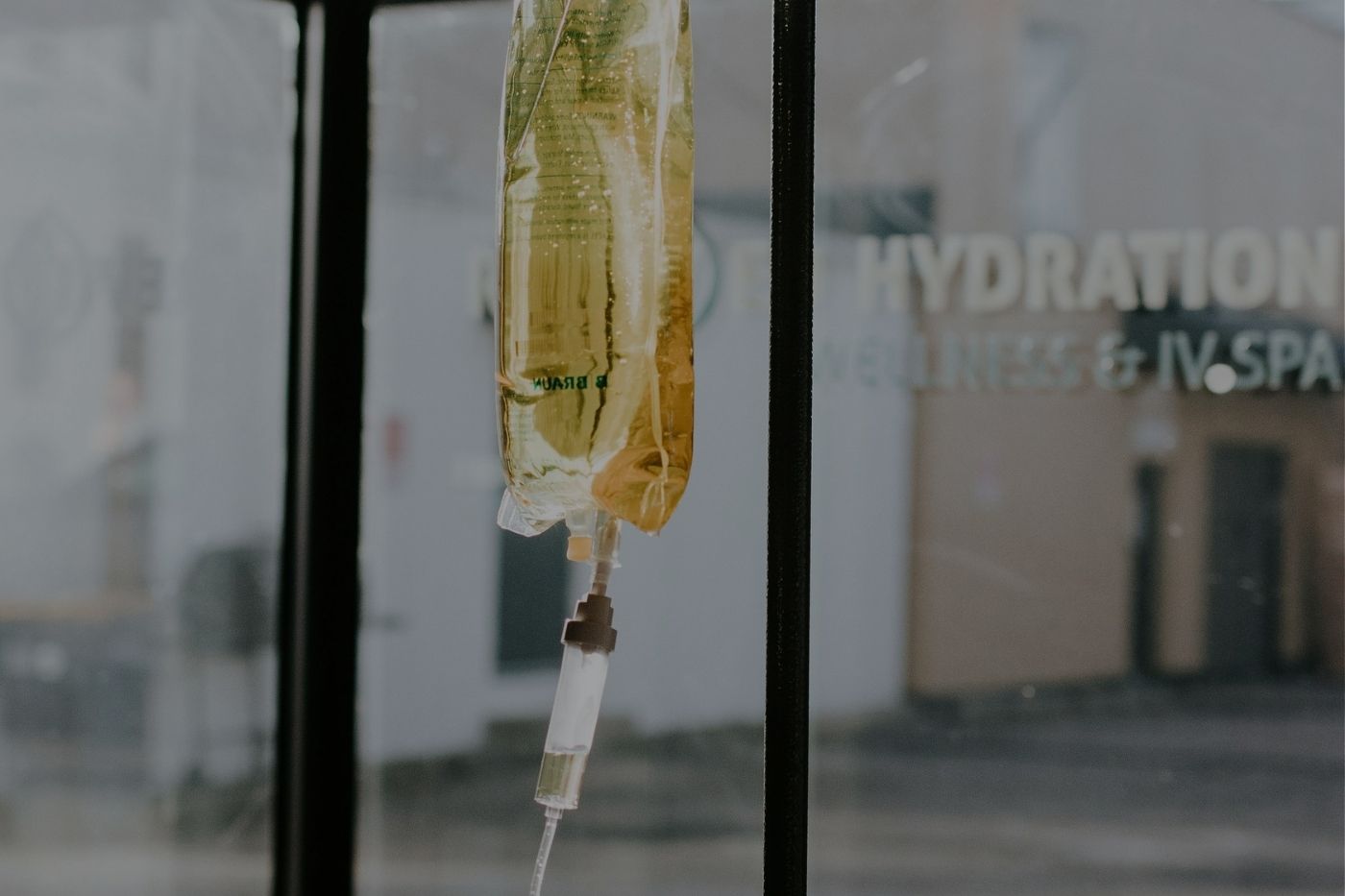
When immune demands are high, at the start of illness, coming off a period of high stress, or during seasonal transitions, getting nutrients into the body through the digestive system is sometimes slower and less efficient than the situation calls for. This is where IV Nutrient Therapy and IM Injections can play a useful role.
IV delivery bypasses the digestive system entirely, delivering nutrients like vitamin C, zinc, B vitamins, and glutathione directly into the bloodstream at concentrations that would not be achievable orally. High-dose intravenous vitamin C, for example, has been studied in both preventive and therapeutic immune contexts. Our post on the role of inflammation, oxidation, and vitamin C in chronic disease covers the science behind this in detail.
Practical steps: IV nutrient therapy is not a replacement for consistent foundational habits; it works best as a complement. It's especially worth considering if you've been under sustained stress, are recovering from illness, or have known absorption issues that limit how well you utilize oral supplements.
8. Get Ahead of the Season with a Full Health Assessment
The most overlooked immune strategy is also the most comprehensive: knowing what's actually going on in your body before symptoms arrive. Unaddressed thyroid dysfunction, hormonal imbalances, micronutrient deficiencies, and chronic low-grade inflammation all quietly compromise immune resilience, and most people have no idea they're carrying any of them until illness makes it visible.
A full functional health assessment at the start of cold and flu season does what no supplement protocol can: it tells you specifically where your immune system's weak points are, so you can address them with precision rather than hoping a general wellness routine covers the gaps.
This connects directly to functional medicine's core philosophy, as explained in our post on what functional medicine is and why it works for chronic illness. You can't optimize a system you don't understand. And immune resilience, like every aspect of health, is far more effective when it's built on accurate information about your specific biology.
Practical steps: Schedule a comprehensive panel before or at the start of the season. Key markers include vitamin D, zinc, ferritin, complete blood count, inflammatory markers like CRP and homocysteine, and a full thyroid panel. Our OligoScan Testing can also quickly assess intracellular micronutrient and heavy metal status, both of which affect immune function and are invisible on standard panels.
Putting It Together
None of these strategies works in isolation. Sleep affects stress. Stress affects gut health. Gut health affects nutrient absorption. Nutrient status affects sleep. It's a system, and the most effective approach is one that addresses the full picture rather than chasing a single fix.
What works reliably isn't the newest supplement or the seasonal wellness trend; it's consistent, well-informed action across the factors that actually drive immune function. Start with what you can implement today, build from there, and if you want to know specifically where your immune resilience gaps are, we're here to help you find out.
Contact Health By Design MD to schedule a consultation and go into this season with a clear, personalized plan.